Thursday, May 28, 6pm-10pm AND Friday, May 29, 8am - Noon
Mario Messina
The mule chest was a versatile and essential piece of furniture in homes and colonial America during the 17th & 18th centuries, where built in closets were uncommon. The large top section was primarily used for storing bulky items like blankets, textiles and household items. The lockable nature of the chest made it suitable for securing important documents, money or other valuable possessions. Often given as wedding gifts, these chests served as “hope chests” for brides to collect items for their new home. Due to their robust construction and low height, they often doubled as a bench for sitting, as other seating was a luxury in many early homes. One popular theory for the name’s origin is that the bottom drawers were used to store slippers, which were referred to as “mules” during that era.
This piece is 1 inch scale and measures 3.75”H x 3”W x 1.75”D
You will assemble the piece following step by step instructions. This will include techniques to measure and cut the cove molding, locating the placement of the knobs and hinges and drilling the holes to install them. You will also do a faux lock on the inside from of the chest.
Using my finishing techniques, you will paint the chest with acrylic paint, then distress it and finally apply an antiquing gel to give it that wonderfully aged look.
Instructor Supplies: precut kit, acrylic paint in 5 color choices, sanding pads and antiquing supplies.
Student Brings: pin drill & bits, angle cutter, paint brushes, basic tool kit and wood glue. If you would like to paint your chest a specific color, please bring your own acrylic paint, keeping in mind that it will change color depending on the level of antiquing applied.
Thursday, May 28, 6pm-10pm AND Friday, May 29, 8am - Noon
Mario Messina
The mule chest was a versatile and essential piece of furniture in homes and colonial America during the 17th & 18th centuries, where built in closets were uncommon. The large top section was primarily used for storing bulky items like blankets, textiles and household items. The lockable nature of the chest made it suitable for securing important documents, money or other valuable possessions. Often given as wedding gifts, these chests served as “hope chests” for brides to collect items for their new home. Due to their robust construction and low height, they often doubled as a bench for sitting, as other seating was a luxury in many early homes. One popular theory for the name’s origin is that the bottom drawers were used to store slippers, which were referred to as “mules” during that era.
This piece is 1 inch scale and measures 3.75”H x 3”W x 1.75”D
You will assemble the piece following step by step instructions. This will include techniques to measure and cut the cove molding, locating the placement of the knobs and hinges and drilling the holes to install them. You will also do a faux lock on the inside from of the chest.
Using my finishing techniques, you will paint the chest with acrylic paint, then distress it and finally apply an antiquing gel to give it that wonderfully aged look.
Instructor Supplies: precut kit, acrylic paint in 5 color choices, sanding pads and antiquing supplies.
Student Brings: pin drill & bits, angle cutter, paint brushes, basic tool kit and wood glue. If you would like to paint your chest a specific color, please bring your own acrylic paint, keeping in mind that it will change color depending on the level of antiquing applied.


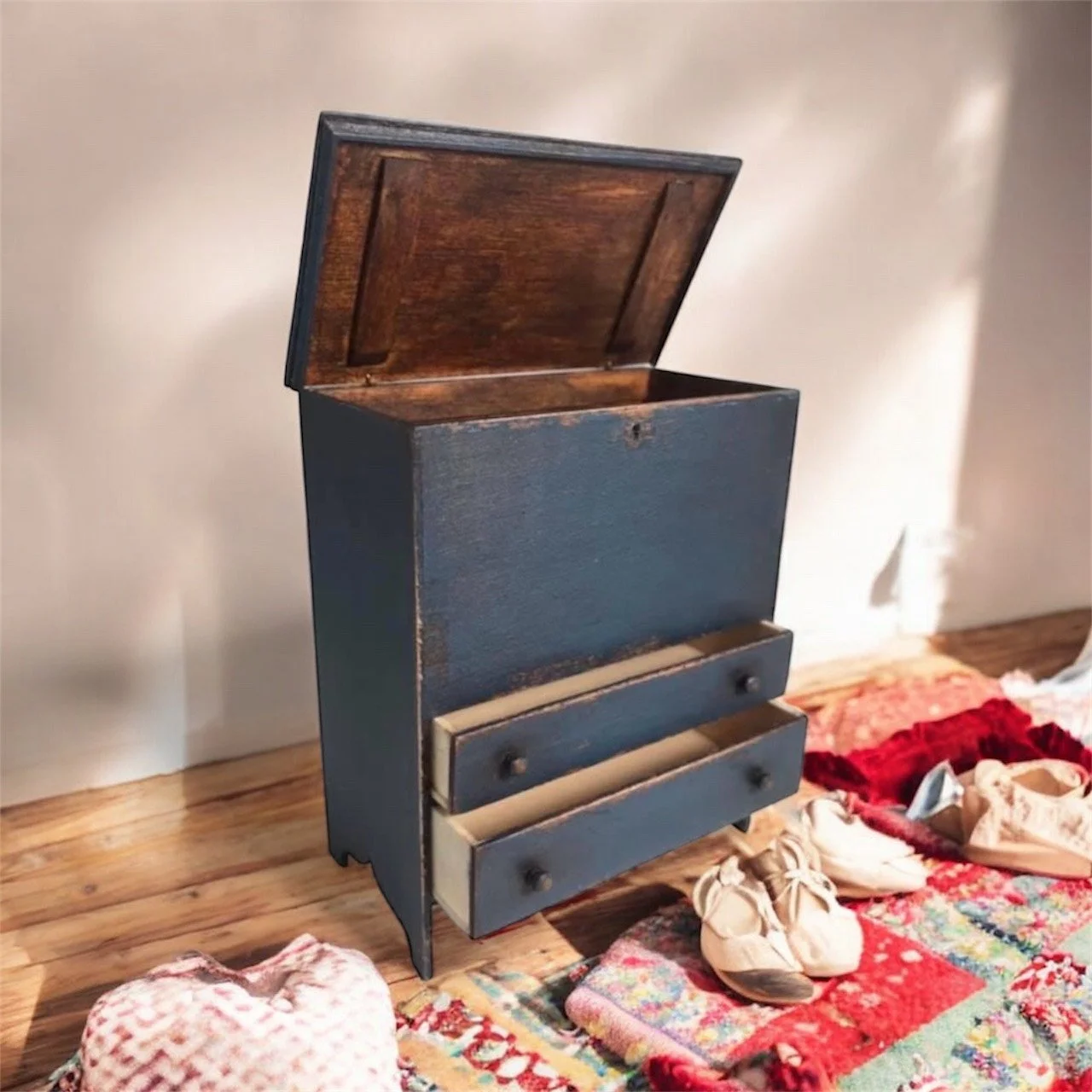 Image 1 of 2
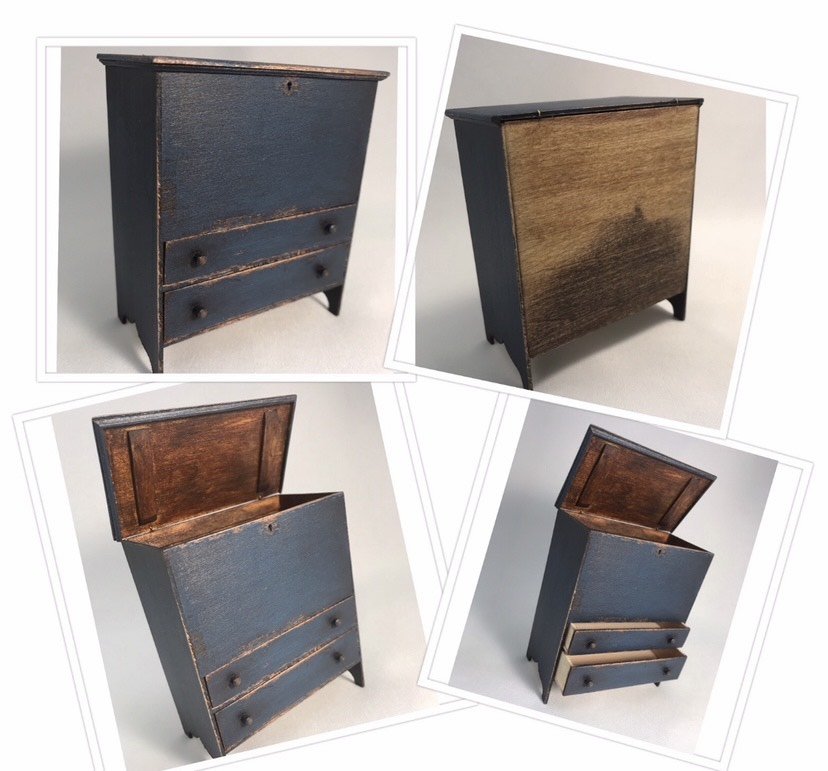 Image 2 of 2