Thursday, Jun 3, 8am - 5pm with a lunch break
Mario Messina, Mini Southern Millworks
AMISH ARMOIRE (CIRCA 1800'S)
Back in the 1600's and 1700's Dutch settlers brought a massive wooden cabinet called a kas (the Dutch word for cupboard) to New York and New Jersey. Before houses had built-in closets these giant wardrobes were the ultimate status symbol. A family would often gift one to a bride as part of her dowry, and it sat front and center in the mail living room to hold the family's best linens, silverware and Sunday clothes.
Around the same time German and Swiss immigrants, including the Amish and Mennonites, settled in Pennsylvania. While the European Dutch loved fancy carvings and big round bun feet on their cabinets the Amish and Pennsylvania Dutch wardrobes were all about clean lines, sturdy local woods like pine and walnut and zero flashiness.
Built to scale using authentic, full-size furniture joinery, this 1 inch scale piece measures 6 3/4” H x 3 3/4” W x 1 3/4” D. It features a triple row of hanging pegs in the upper case and two drawers at the bottom with locking pins. The primary wood is walnut and secondary wood is basswood.
You will assemble the piece following step-by-step oral and written instructions. I will show you my techniques for locating the placement of the knobs and hinges, drilling the holes and installing them and you will measure and cut the cove molding. Finally I will show you my technique for finishing the piece using the water base stain.
Teacher Supplies: Precut kit, water base stain for finishing, sanding pads and glue.
Students should bring: Flat black TESTORS ENAMEL PAINT for the hinges, a pin drill and bits, angle cutter, paint brushes and basic tool kit. A magnetic glueing jig will be helpful also if you have one.


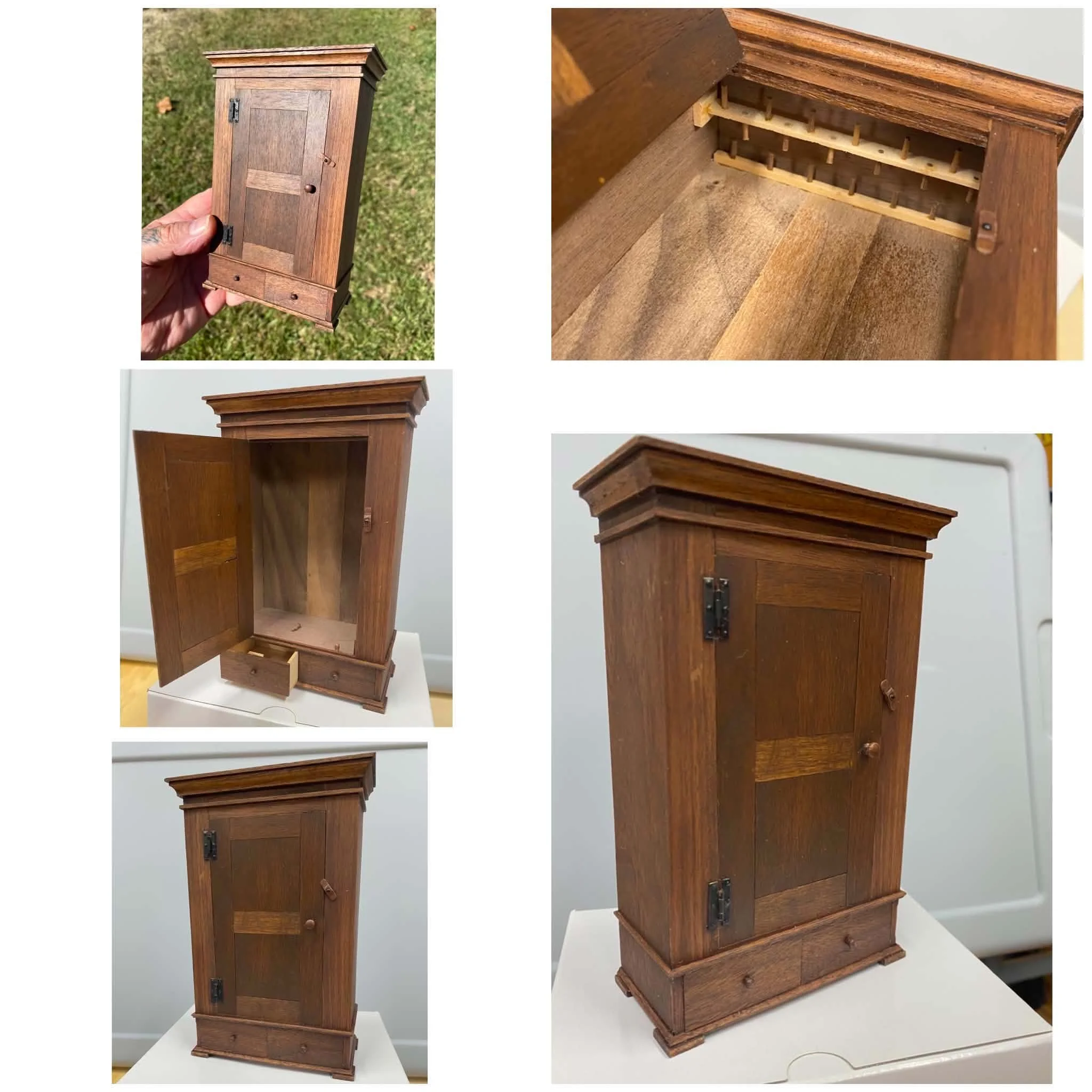 Image 1 of 5
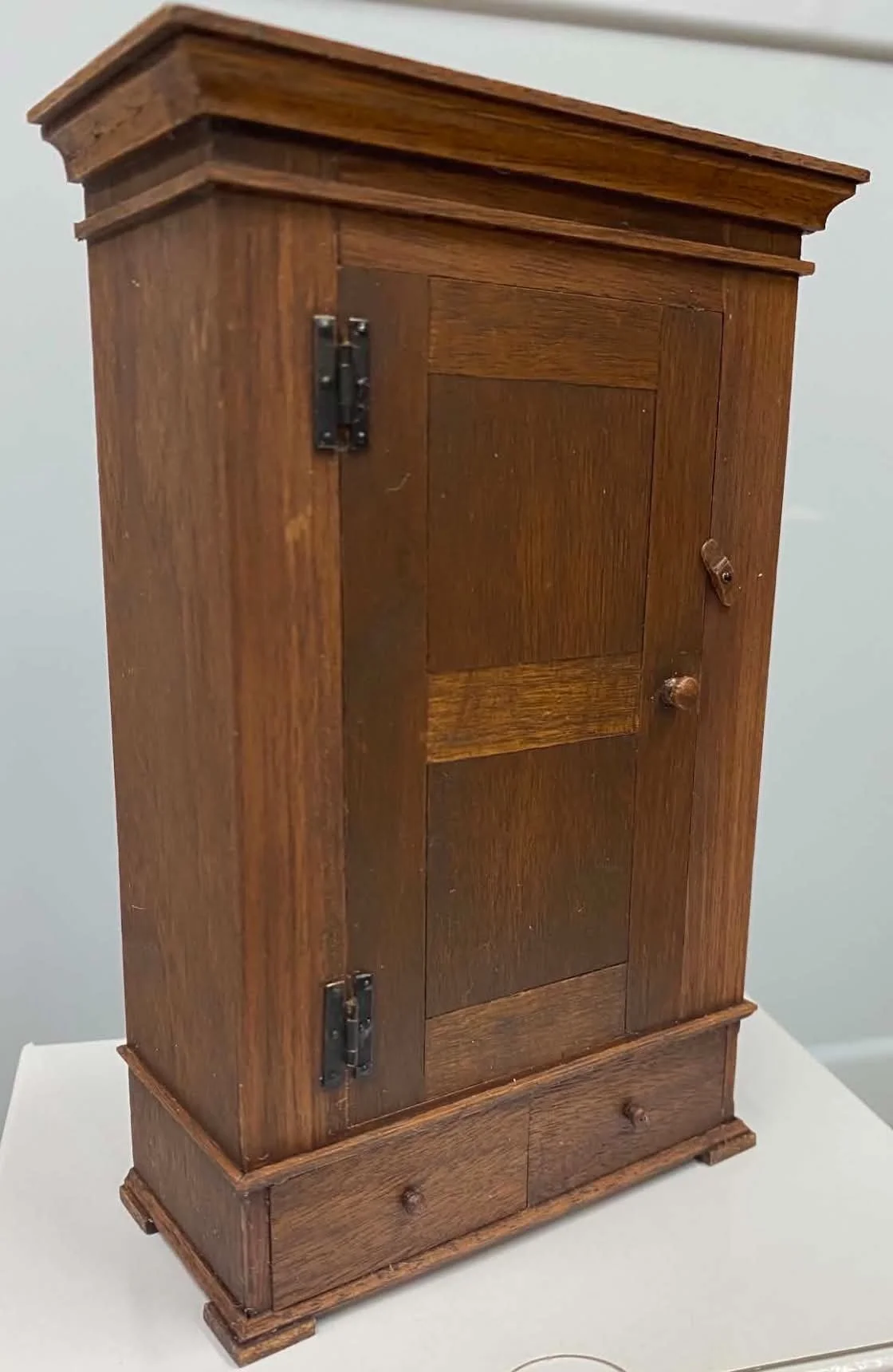 Image 2 of 5
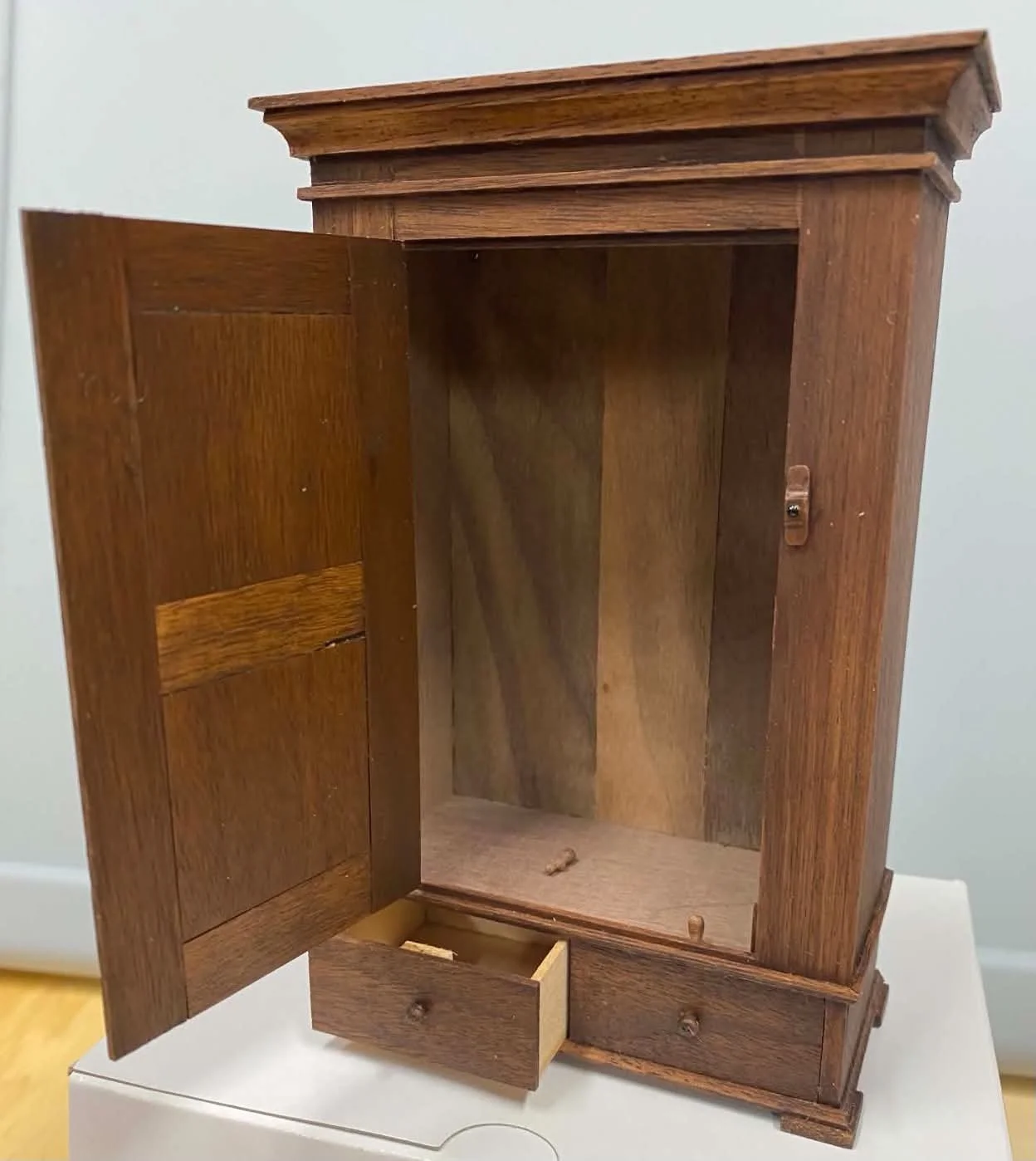 Image 3 of 5
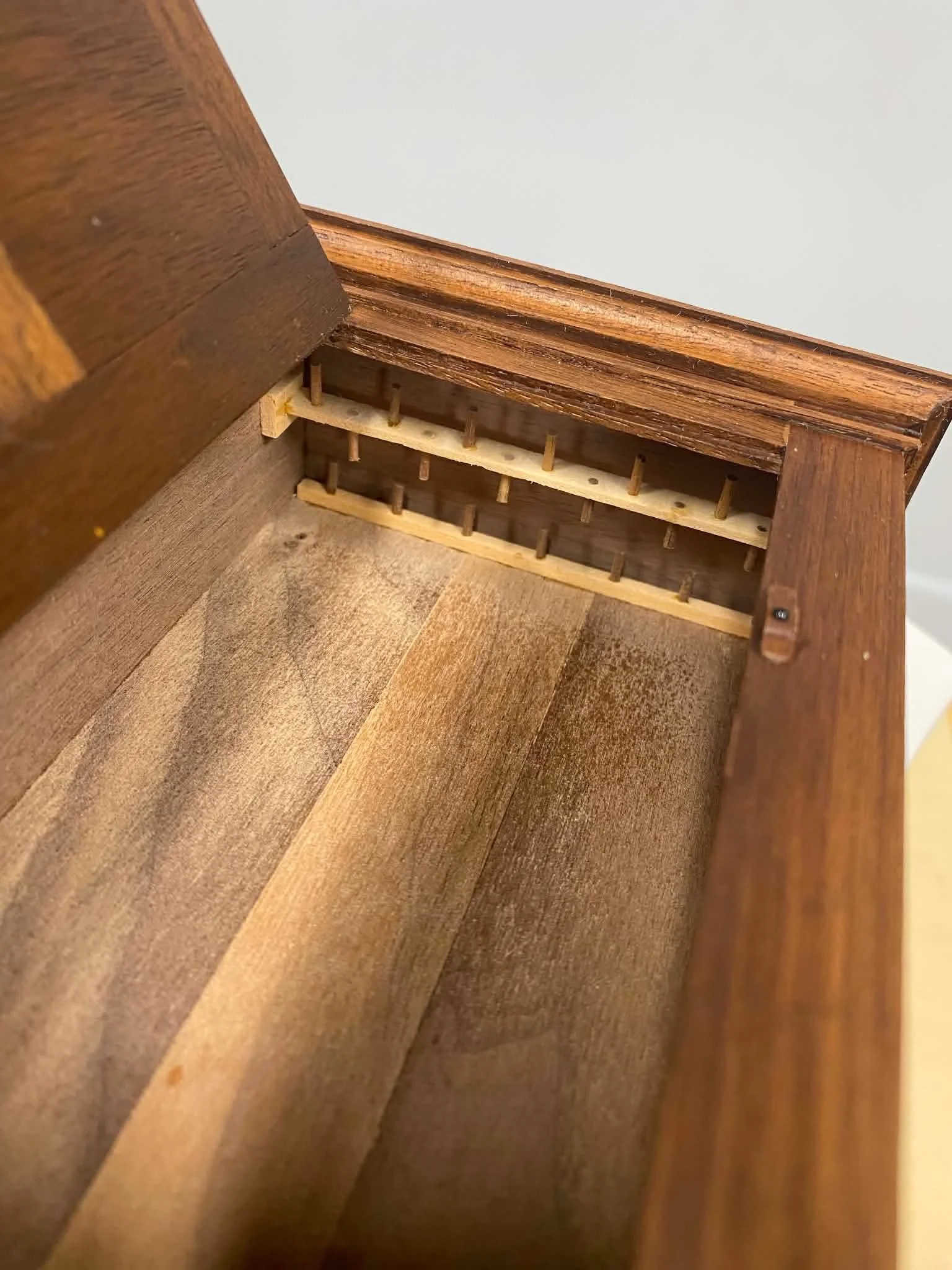 Image 4 of 5
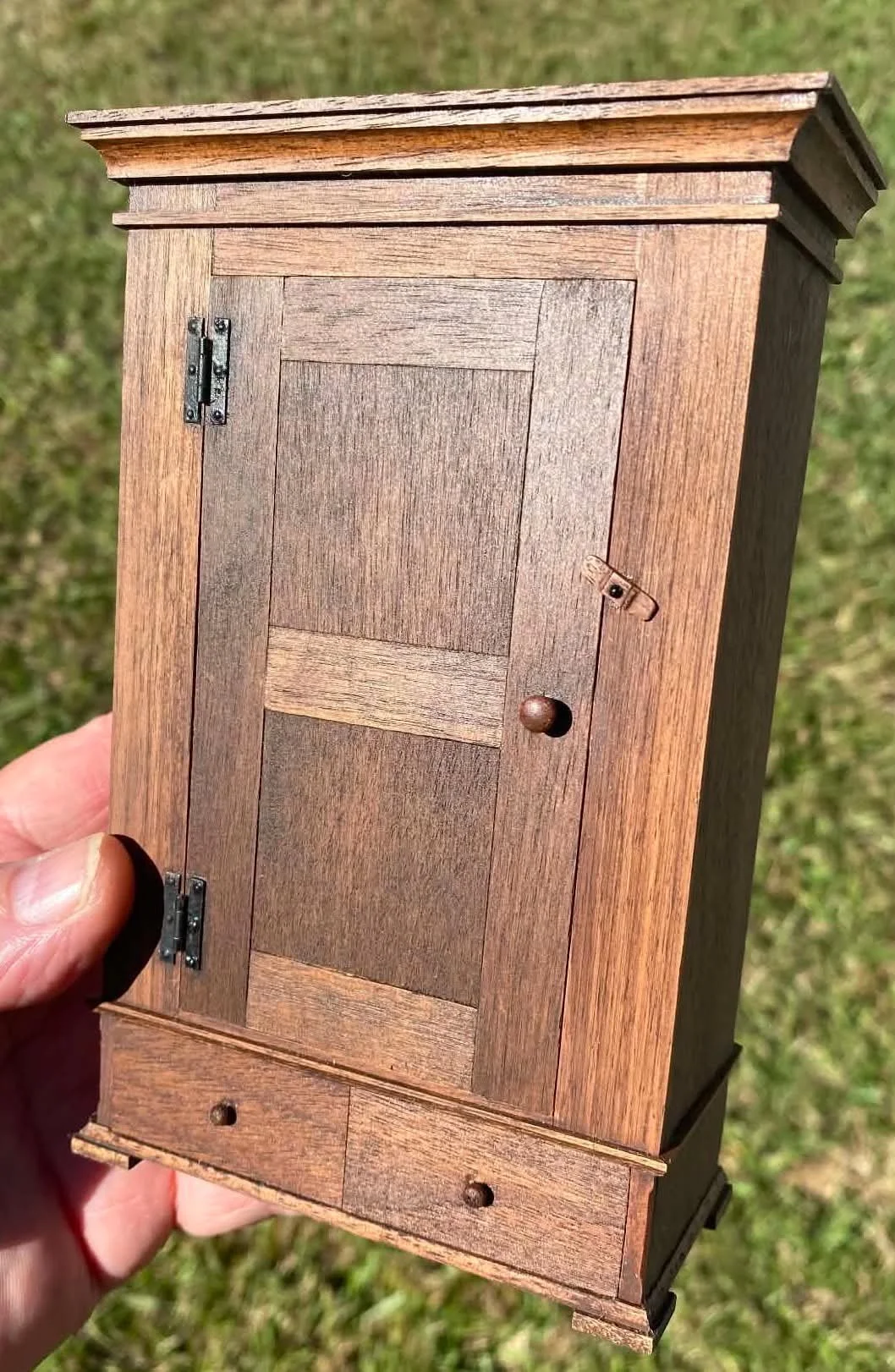 Image 5 of 5
